
Technical White Paper
Wind Turbine Ground-Borne Vibration: Why A-Weighted Airborne Standards Fail to Detect the Dominant Harm Mechanism
Executive Summary
Wind turbine noise compliance frameworks in use globally share a common and fundamental scientific deficiency: they measure only one of two distinct energy transmission pathways, and it is the wrong one.
Current standards rely on A-weighted airborne sound pressure measurement at property boundaries. This methodology was developed for steady-state industrial noise in workplace environments. It was never designed for, and is demonstrably incapable of, assessing the primary harm mechanism: sympathetic structural resonance.
Ground-borne vibration transmission — seismic energy propagating from turbine foundations through local geology into residential building structures — excites each building at its own natural resonant frequencies. The building then re-radiates this energy as broadband audible sound and tactile vibration. Occupants do not experience the turbine's ground signal directly. They experience the building's amplified structural response to it. The building itself becomes the active source of the perceptible harm.
This pathway is geology-dependent. It explains the empirically documented but regulatorily unexplained phenomenon of severe impact in one dwelling and no impact in an adjacent dwelling at similar air-distances from the installation. Air does not behave this way. Ground does.
The physics described in this paper is taught in every entry-level physics course, demonstrated in every undergraduate laboratory, and applied routinely across geotechnical engineering, structural dynamics, and seismology. It is not contested. It is not novel. Wind turbine regulations were drafted with one purpose: to ensure that turbines could be approved and built.
Dave Ward — Inventor, Ward Effect® Technology | Six Sigma Black Belt | 50+ Years Acoustic Research
Patent Portfolio: NZ 739314, NZ 770993, NZ 778527, USA, India, Philippines | Patent Pending: NZ 831742
resonancesensor@gmail.com | wardscope.com | wardeffect.com
Contents
- Two Transmission Pathways
- Why Ground-Borne Transmission Is Geology-Dependent
- Why A-Weighted Measurement Cannot Detect Ground-Borne Harm
- The Compliance Circularity Problem
- A Scientifically Defensible Assessment Framework
- Regulatory Reform: The Scientific Basis
- The Solution: Source Elimination, Not Symptom Management
- Conclusion
- Field Case Study
- Appendix: Design of Experiments
- References
1. Two Transmission Pathways
Wind turbines transfer energy into their surroundings through two physically distinct mechanisms that must be treated separately in any rigorous impact assessment.
1.1 The Energy Disparity: Why the Two Pathways Are Not Comparable
Acoustic energy flux is proportional to the density of the transmission medium and the square of the particle velocity. Air has a density of approximately 1.2 kg/m³. Soil ranges from 1,500 to 2,000 kg/m³. Bedrock ranges from 2,000 to 2,700 kg/m³. The same mechanical displacement amplitude in rock therefore carries over 1,000 times the energy of the equivalent displacement in air. This is a difference of three orders of magnitude in energy-carrying capacity.
Airborne sound from a wind turbine at residential distances arrives as low-amplitude pressure pulses. Geometric spreading alone reduces intensity by 6 dB with every doubling of distance. Atmospheric absorption and terrain effects add further attenuation.
Ground-borne waves propagate through a continuous solid medium at far lower attenuation rates, particularly at the low frequencies produced by blade rotation. The mechanical energy driving a wind turbine foundation — thousands of tonnes of rotating mass and structural loading — couples directly into the ground.
Consider the analogy of a tsunami versus a typhoon. A Category 5 typhoon carries enormous airborne energy. Yet a tsunami 1 metre high in open ocean, invisible and unfelt at the surface, carries sufficient energy to devastate coastlines hundreds of kilometres distant. The difference is medium density. Water is 800 times denser than air. Rock is more than 1,000 times denser. The current regulatory framework measures the typhoon and ignores the tsunami.
1.2 Airborne Transmission: The Low-Energy Pathway
Aerodynamic and mechanical noise propagates through air as pressure waves. A-weighted measurement at property boundaries typically records 35–45 dB(A) at residential distances — representing acoustic intensities in the range of 0.000003 watts per square metre. This is the lower energy of the two pathways by a very large margin.
1.3 Ground-Borne Transmission: The High-Energy Pathway
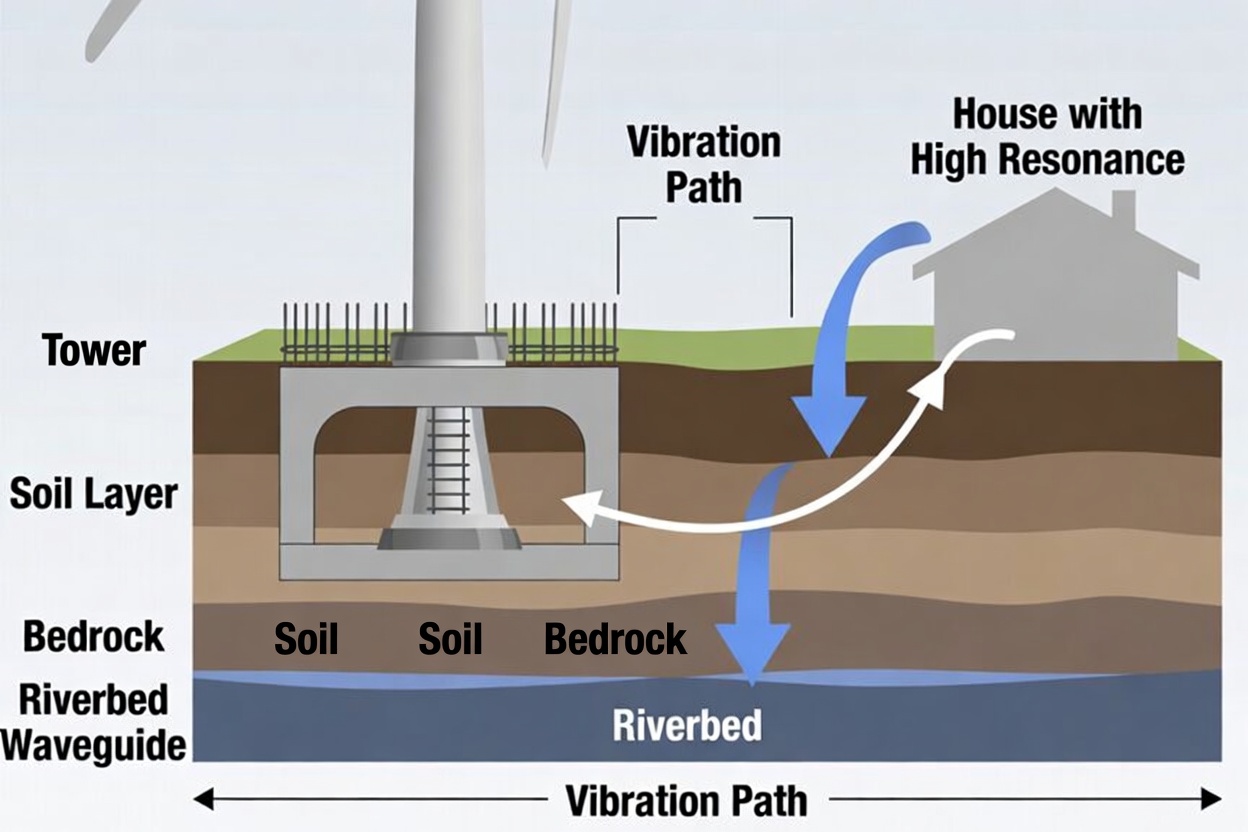
Wind turbine foundations transmit mechanical and aerodynamic forces directly into the ground as compressional (P-waves) and shear (S-waves) body waves. A significant portion of the energy propagates as Rayleigh waves — surface waves that travel along the ground-air interface with elliptical particle motion. These low-frequency components (typically 1–10 Hz) experience particularly low attenuation over distance, allowing substantial energy to reach building foundations kilometres away.
Riverbeds and layered geology act as natural waveguides, similar to optical fibres. Waves undergo repeated internal reflections at material boundaries, channelling energy efficiently along the riverbed with minimal loss. This waveguide effect explains why vibration can travel preferentially along river valleys while attenuating rapidly in other directions.
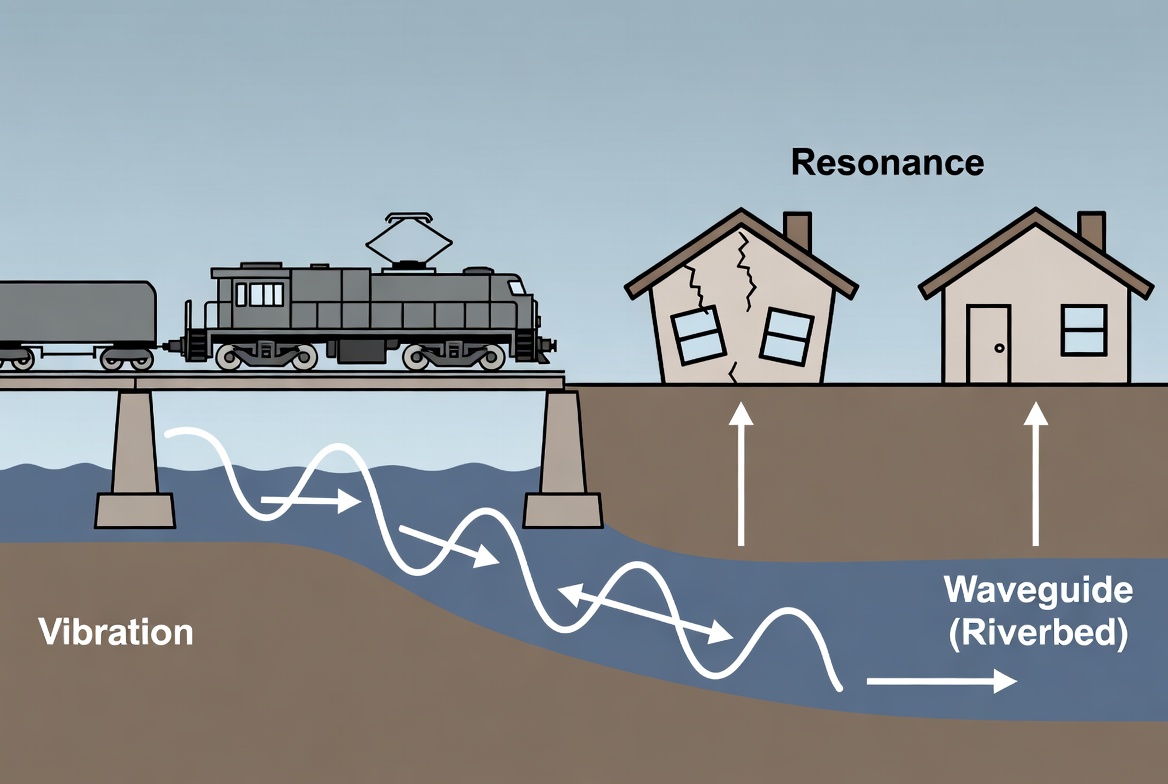
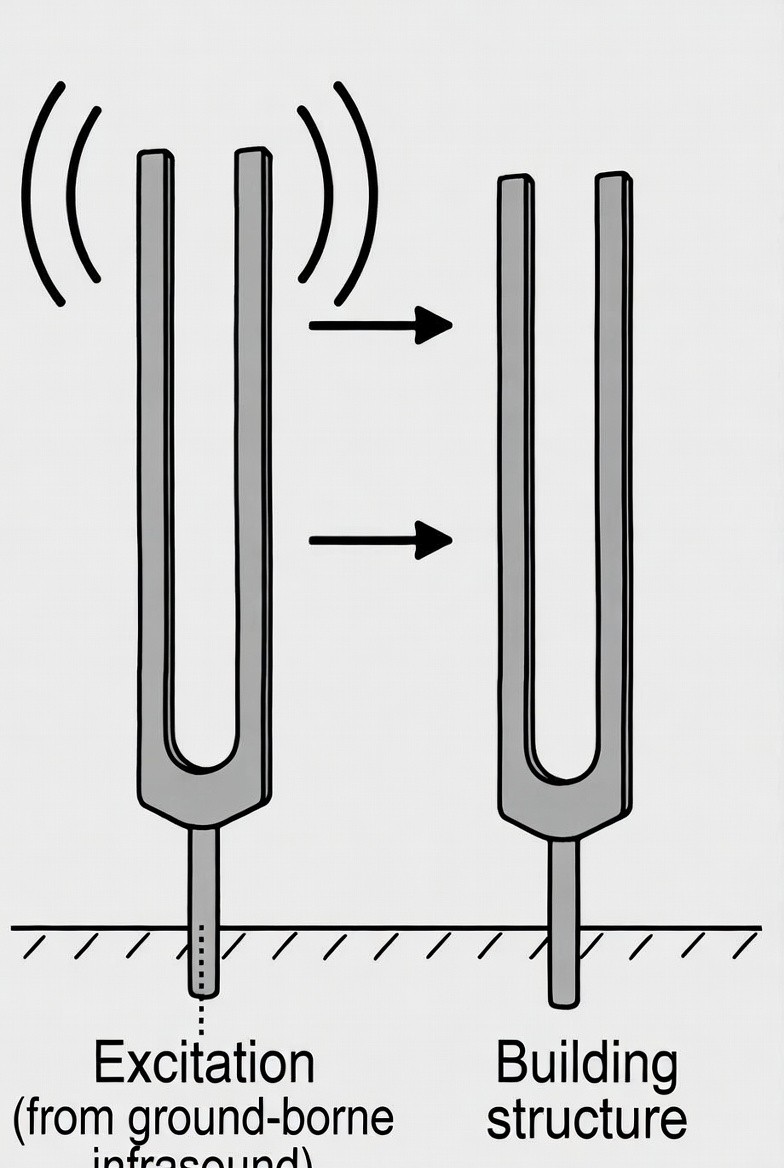
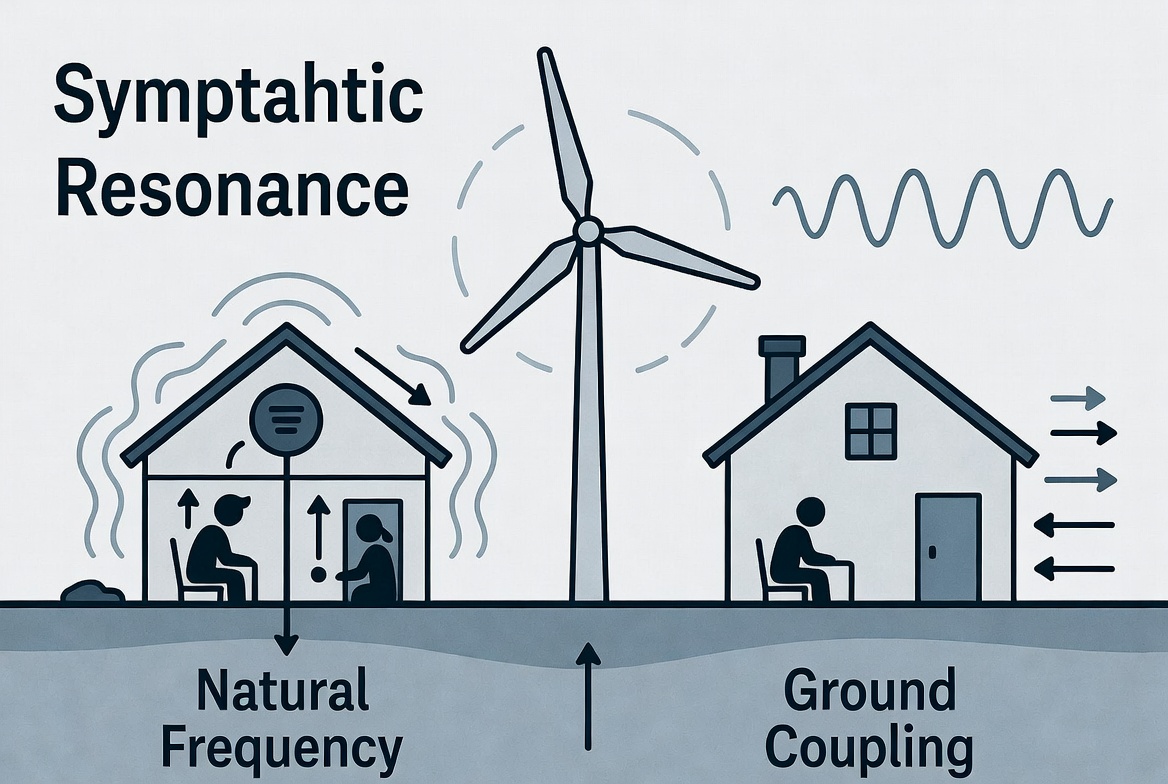
When this ground-borne energy reaches a building foundation, it excites the structure at its own natural resonant frequencies. Where these coincide with the blade-pass frequency or its harmonics, sympathetic resonance occurs — the building amplifies the signal. The structure then re-radiates energy across a broad spectrum as audible noise and tactile vibration experienced by occupants.
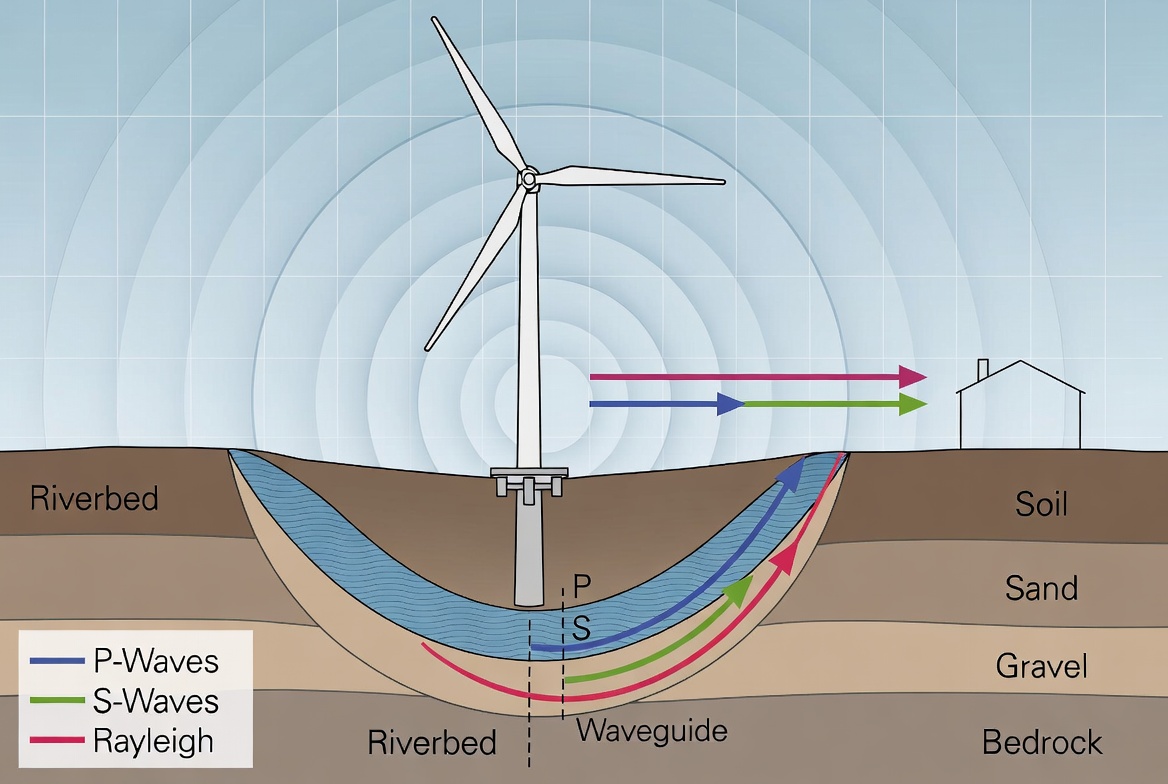
The current regulatory framework assesses the low-energy pathway and ignores the high-energy pathway entirely. This is not a conservative approach to harm assessment. It is the inversion of one.
2. Why Ground-Borne Transmission Is Geology-Dependent
The propagation of seismic energy through ground is determined by the mechanical properties of the transmission medium. Unlike air, which has relatively uniform acoustic properties, geological materials vary enormously:
- Clay soils: high attenuation, poor transmission over distance
- Sand and gravel: moderate transmission, frequency-selective
- Sandstone and limestone: efficient transmission, low attenuation
- Granite and hard bedrock: excellent transmission with minimal loss over kilometres
- Water-saturated ground and aquifers: highly efficient transmission medium
Geological discontinuities — faults, bedding plane boundaries, rock type interfaces — act as reflectors and waveguides, creating standing wave patterns in the ground at specific locations. A building situated at a constructive interference node will experience significantly elevated vibration compared to a building 50 metres away at a destructive interference node.
This is not theoretical. The same physical principles are applied routinely in seismic hazard assessment, blast vibration monitoring, railway-induced ground vibration assessment, and building isolation design for concert halls and precision manufacturing facilities.
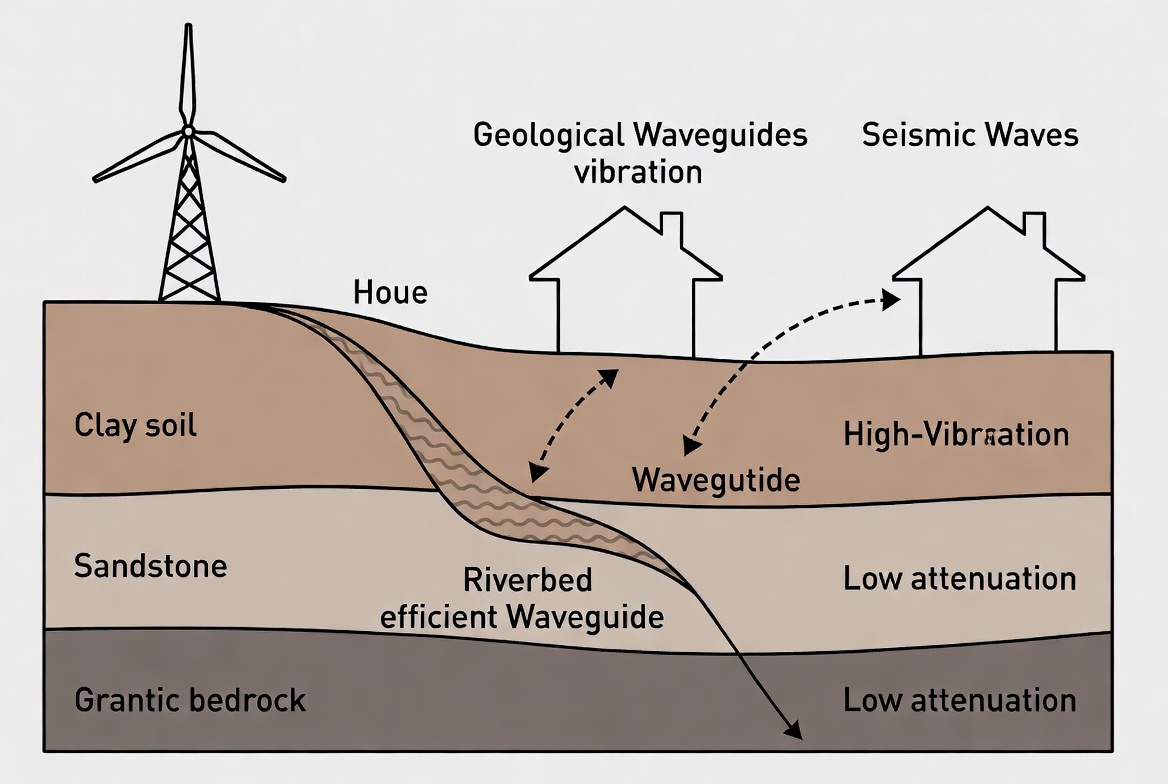
Real-World Analogy: Train Crossing a Bridge
When a train crosses a bridge, the vibration travels efficiently along the riverbed — a highly efficient geological waveguide — through the ground. Some houses experience strong audible noise and tactile vibration because the ground-borne energy excites their natural resonant frequencies. Other houses at similar air-distances but off the waveguide path notice little to no effect. This is the exact same mechanism as wind turbine ground-borne vibration.
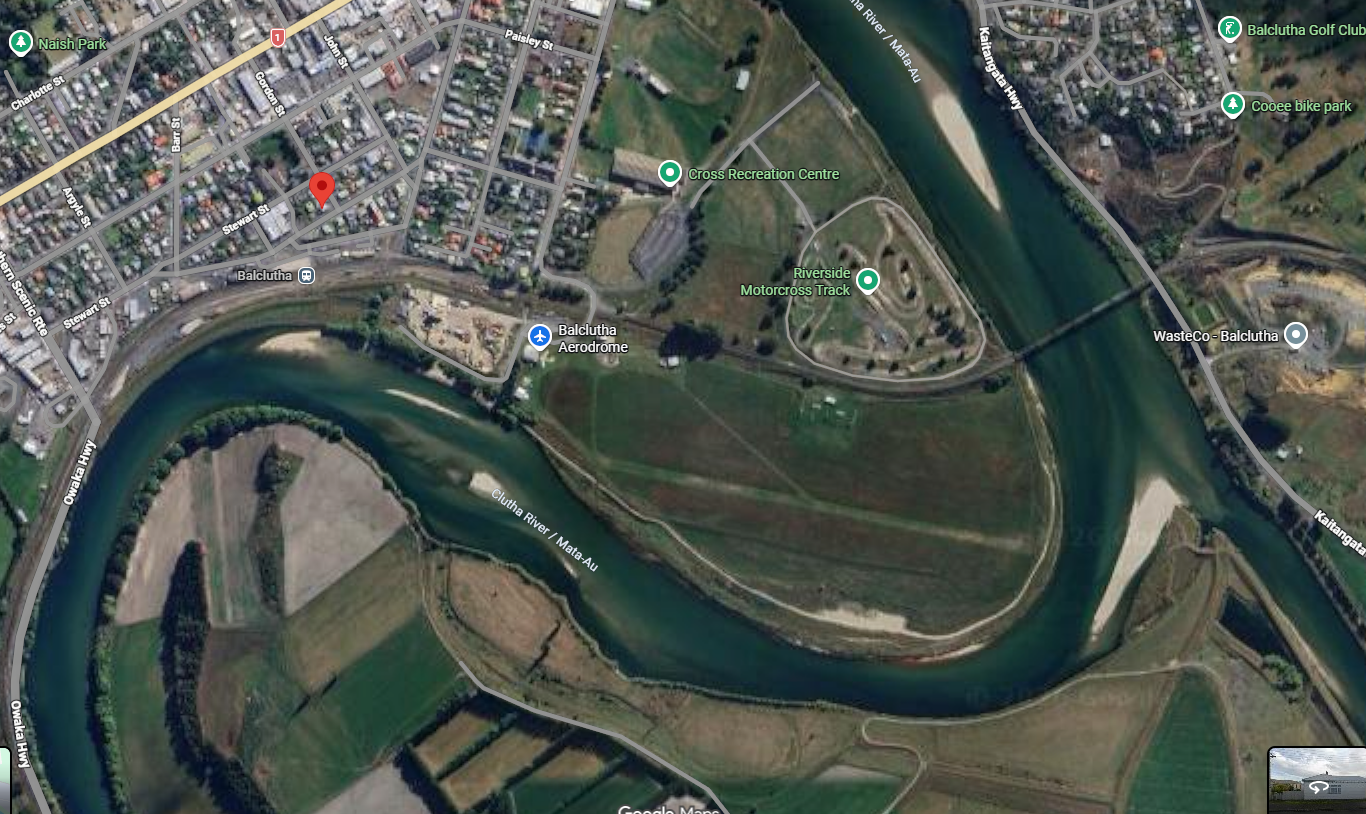
Satellite Example — Balclutha, New Zealand (Clutha River / Mata-Au)
The red pin marks a house affected when trains cross the bridge. Vibration propagates along the Clutha River / Mata-Au riverbed, impacting this property through ground transmission and structural resonance. The effect is not noticeable at other houses at similar air-distance when the train passes closer but off the waveguide path.
3. Why A-Weighted Measurement Cannot Detect Ground-Borne Harm
3.1 A-Weighting Was Not Designed for This Application
The A-weighting frequency response curve was developed in the 1930s to approximate the loudness perception of the human auditory cortex for pure tones at moderate levels in quiet environments. It rolls off sharply at low frequencies: approximately 26 dB attenuation at 63 Hz, 16 dB at 125 Hz, and 50–60 dB or more at infrasound frequencies.
Wind turbines are not pure tones at moderate levels. They are broadband, low-frequency, amplitude-modulated energy sources. Applying A-weighting systematically eliminates from consideration the very frequency ranges in which ground-borne transmission operates most efficiently and in which peer-reviewed research has identified physiological harm mechanisms.
3.2 Sympathetic Vibration: The Building Becomes the Source
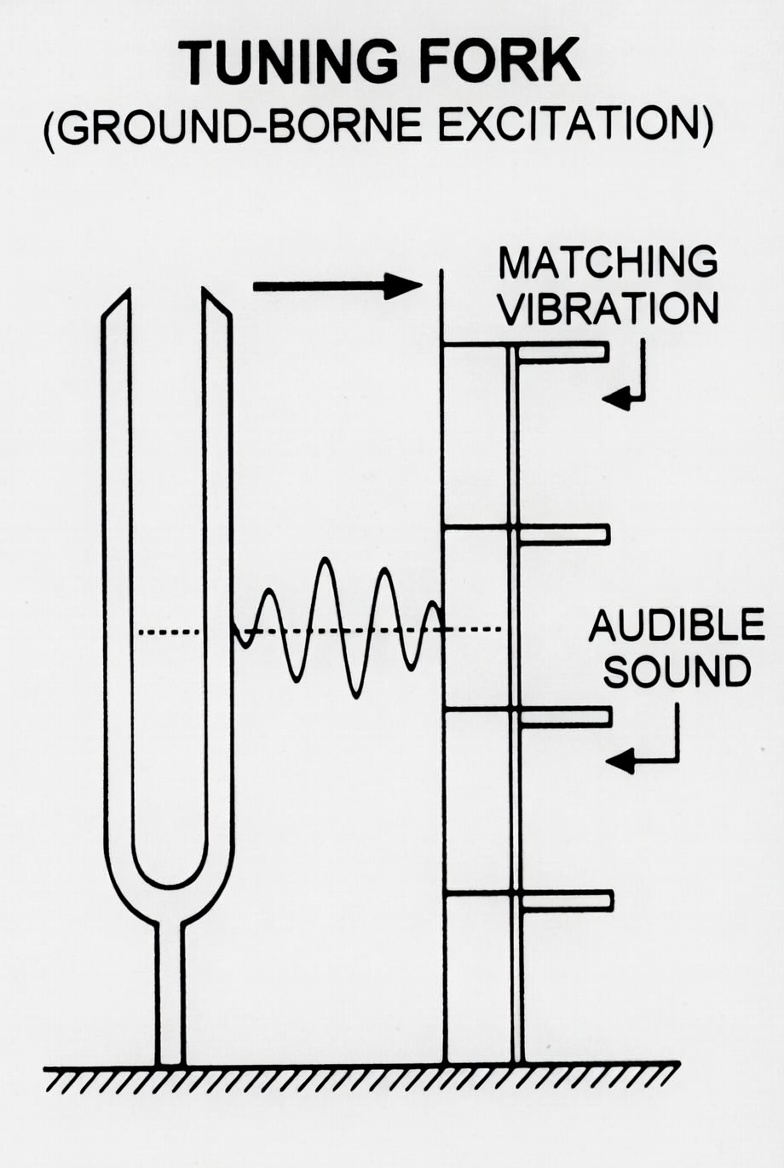
The vibrations experienced by occupants inside affected buildings are not the turbine's original ground-borne signal. They are generated by the building structure itself, through sympathetic resonance. The building is the source of the perceptible harm — excited into producing it by low-frequency energy it receives through its foundation.
Ground-borne low-frequency and infrasound energy, often sub-audible at the foundation, enters the building structure. It excites the building at its natural resonant frequencies — typically in the range of 5–80 Hz. The structure then re-radiates this energy across a broad spectrum as audible sound and tactile vibration throughout the interior.
The analogy is precise: a tuning fork struck near a guitar string tuned to the same frequency causes the string to vibrate and produce sound. The guitar produces the loud, perceptible sound — not the tuning fork directly. In the wind turbine context, the ground-borne infrasound is the tuning fork. The building is the guitar.
3.3 The Direct Inner Ear Pathway: A Separate and Compounding Effect
Research by Salt and Kaltenbach (Washington University, 2011) demonstrated that the saccule — a component of the inner ear vestibular system — responds to infrasound at levels well below the threshold of conscious auditory perception. Outer hair cells in the cochlea are also stimulated at sub-threshold levels. This constitutes a direct physiological pathway from infrasound to neurological response, without the intermediate step of structural re-radiation. A-weighted measurement cannot represent this pathway.
3.4 Amplitude Modulation Is Invisible to Leq Averaging
The cyclic variation in turbine noise level produced by blade rotation (typically at 0.5–2 Hz modulation rate) is a well-established source of annoyance. Equivalent continuous level averaging (Leq) converts a highly structured, periodically varying signal into a single number that contains no information about the modulation that drives the complaint.
3.5 The Two-Building Consequence: Elementary Physics the Framework Ignores
Two residential buildings at comparable distances from the same turbine are two different physical structures with two different sets of natural resonant frequencies, sitting on two different local geological substrates. One may resonate strongly under ground-borne excitation at blade-pass frequency and its harmonics. The other may not.
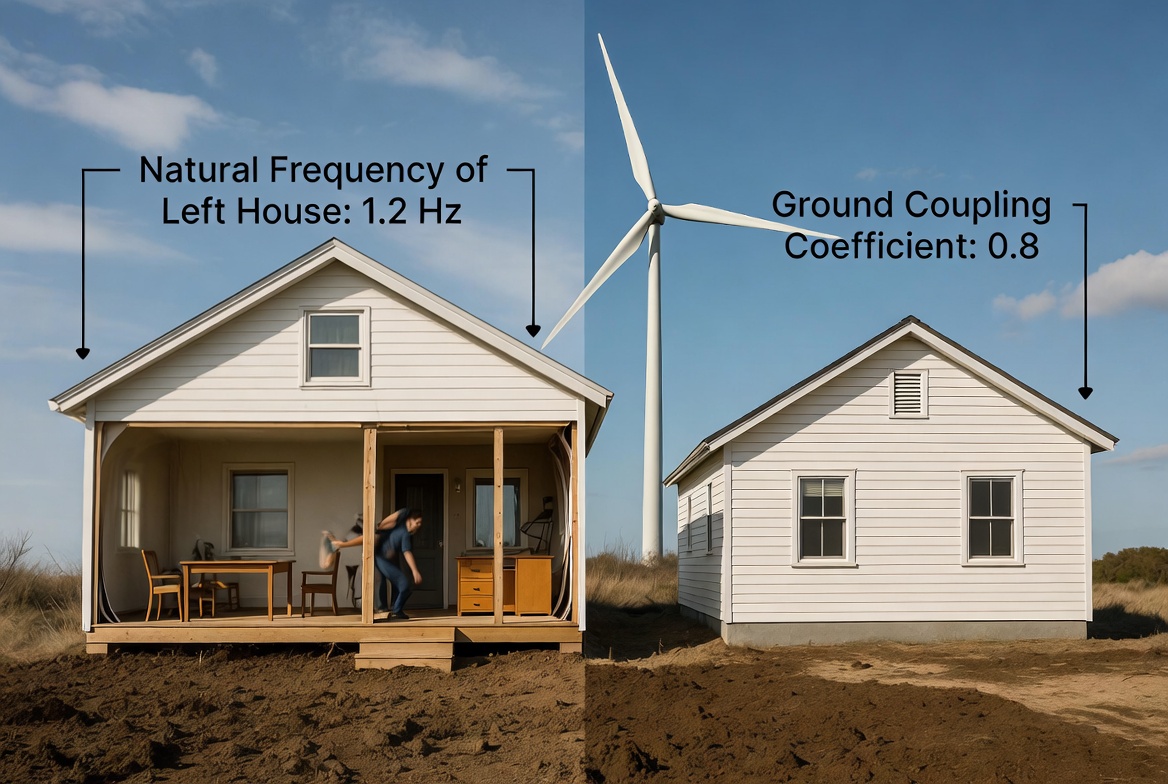
The question is not whether this outcome is scientifically explicable. It plainly is. The question is why an assessment framework governing installations that demonstrably produce this outcome has been constructed in a way that is constitutionally incapable of detecting it.
3.6 Boundary Measurement Addresses the Wrong Location
Ground-borne vibration exposure occurs inside the building. The exposure pathway is: turbine foundation → geology → building foundation → building structure → occupant. An airborne sound measurement at the property boundary intercepts none of this pathway. It is a measurement of a different physical quantity at a location unrelated to the exposure mechanism.
4. The Compliance Circularity Problem
Current wind turbine noise standards create a self-validating compliance framework:
- The standard defines what must be measured (A-weighted airborne sound at boundary)
- The measurement methodology is selected to address that specific metric
- Setback distances are calculated to achieve compliance with the metric
- Post-construction monitoring confirms compliance with the same metric
- Complaints are assessed against the same metric and found non-compliant with regulatory limits
At no point in this cycle is the ground-borne transmission pathway considered, because the standard does not require it. A wind turbine installation can be fully compliant with every applicable noise regulation while simultaneously transmitting significant ground-borne vibration into residential structures.
This is not regulatory failure in the sense of inadequate enforcement. It is a structural deficiency in what the regulation requires to be measured. The ruler is calibrated to produce compliance. It cannot measure harm.
5. A Scientifically Defensible Assessment Framework
The following table contrasts current practice with the measurement parameters required for a complete noise risk assessment addressing both transmission pathways:
| Parameter | Current Practice | Why It Fails | Science-Based Alternative |
|---|---|---|---|
| Frequency weighting | A-weighted dB(A) | Suppresses LF/infrasound by 26–60 dB | Unweighted dBZ + G-weighted infrasound per ISO 7196 |
| Temporal metric | Leq averaging | Masks amplitude modulation; hides intermittency | L10/L90 percentile + AM depth measurement |
| Transmission pathway | Airborne only | Ground-borne transmission entirely unmeasured | Ground vibration at foundation + structural response |
| Assessment location | Property boundary | Exposure occurs inside the structure, not at boundary | Interior measurement + structural vibration |
| Geological variable | Not assessed | Propagation is geology-dependent; explains house-to-house variation | Ground propagation survey; coherence analysis |
| Health metric | Level vs fixed limit | Limit derived from same flawed metric | Comparison with WHO physiological harm thresholds |
| Receptor building response | Not assessed | Building is the perceptible source of harm via sympathetic resonance | Structural modal analysis; indoor full-spectrum measurement; accelerometers; coherence with turbine cycle |
5.1 The Coherence Analysis Requirement
A critical element of ground-borne assessment is coherence analysis: mathematical demonstration that vibration measured in the receptor building is causally related to turbine operation. This is achievable by simultaneous measurement at turbine foundation and receptor location, with cross-spectral analysis showing correlation at blade-pass frequency and harmonics. This constitutes scientific proof of transmission, not anecdotal claim.
6. Regulatory Reform: The Scientific Basis
The WHO 2018 Environmental Noise Guidelines recommended that wind turbine noise assessment be treated as a separate category from standard industrial noise, recognising that existing frameworks were not adequate. This recommendation has not been fully implemented in any major jurisdiction.
6.1 Why Sympathetic and Harmonic Vibration Remain Absent from Regulatory Discourse
The absence of sympathetic structural resonance from wind turbine noise standards is not due to ignorance of elementary physics. Several reinforcing mechanisms have kept the framework narrowly focused:
- Measurement defines research. Because no standard requires ground vibration measurement, there has been no systematic research programme to develop these protocols.
- Commercial incentives suppress expansion. Consultants engaged by developers are tasked with demonstrating compliance. Identifying additional harm pathways creates legal and commercial risk.
- The mechanism is invisible from outside. Structural resonance only becomes visible with an accelerometer on the floor or a contact microphone on the wall, measuring indoors while the turbine operates.
- Affected residents lack the technical vocabulary. A resident who reports that their house vibrates and they cannot sleep cannot name the mechanism. Without the mechanism named, the complaint is treated as subjective.
7. The Solution: Source Elimination, Not Symptom Management
The technical solution to ground-borne vibration transmission from wind turbine foundations is not a research problem. Foundation anti-vibration isolation, rotor balancing, drivetrain isolation mounts, and tuned mass dampers are established civil and mechanical engineering, routinely applied in high-speed railway corridors, hospital operating theatres, electron microscopy facilities, concert halls, and precision manufacturing plants.
7.1 Full-System Vibration Control
A complete anti-vibration programme addresses the turbine as an integrated rotating machine:
- At the rotor: static and dynamic balancing to eliminate mass imbalance forces at blade-pass frequency. The direct equivalent of tyre balancing — standard on every road vehicle, absent from most turbines.
- At the drivetrain: vibration-isolating mounts between gearbox, generator, and nacelle frame. Standard practice in all other rotating machinery.
- At the tower: tuned mass dampers to suppress resonant oscillation. Standard on tall buildings, bridges, and chimneys.
- At the blade: trailing edge serration, tip geometry optimisation, and pitch modulation to reduce aerodynamic infrasound generation at source.
- At the foundation: anti-vibration bearing pads and isolation systems at the interface between tower base and geological substrate — the last interception point before vibration enters the ground transmission pathway.
Addressing only one element while leaving others uncontrolled forces the single measure to work against the full unattenuated output of the machine. Addressing all elements in combination reduces vibration at every point in the chain: less generated, less transmitted, less reaching the foundation, less entering the ground.
7.2 The Commercial Case: Vibration Elimination Is a High-Return Investment
Gearbox replacement costs $350,000–$500,000 per turbine (NREL, 2012). Average gearbox service life in practice is 6–8 years against a 20-year design life — a shortfall almost entirely attributable to vibration-induced fatigue. A 30% reduction in vibration amplitude extends gearbox life from approximately 7 years to 15+ years, generating a saving of approximately $8–12 million per 50-turbine farm over asset life from gearbox replacements alone, before bearing, blade, and tower benefits are included.
The developer who installs full-system vibration control at commissioning protects the surrounding community, reduces bird mortality, and extends the service life of a capital asset worth tens of millions of dollars. The cost of not doing so has been borne entirely by residents, wildlife, and by the turbines themselves through premature failure.
7.3 Ecological Impact: Why Birds Fly into Wind Turbines
Birds, especially migratory species and raptors, use infrasound (0.1–10 Hz) for long-distance navigation, orientation, and terrain awareness. Turbine infrasound at blade-pass frequency and harmonics directly overlaps this range and interferes with these natural cues.
Importantly, birds are not primarily struck by moving blades. They actively fly into the blades, tower, or nacelle. Many documented collisions involve birds approaching at speed and impacting stationary or slowly moving structures. This pattern is inconsistent with simple visual failure by highly visual, acrobatically capable birds. It is consistent with spatial disorientation caused by infrasound disruption: the bird loses accurate perception of the turbine's position and geometry in space and flies directly into it.
If birds were simply failing to see the rotating blades, we would expect most collisions to involve the fast-moving blade tips. Instead, a substantial proportion of strikes involve the tower and nacelle — structures that are large, stationary, and easily avoidable by healthy birds under normal conditions. Infrasound-induced spatial disorientation provides the mechanistic explanation.
Full-system vibration control reduces infrasound emission at source. The same engineering that eliminates ground-borne vibration to residential buildings eliminates the navigational disruption signal to birds. The solution is identical. The regulation that would require it does not exist. The technology that would implement it already does.

8. Conclusion
The fundamental problem with wind turbine noise regulation is not that limits are too high. It is that the measurement framework cannot detect the primary harm mechanism.
Ground-borne vibration transmission is a well-understood physical phenomenon governed by established engineering principles. It explains the geographical specificity of complaints that airborne noise models cannot account for. It propagates through geology in ways that make air distance irrelevant to impact prediction. It enters buildings and excites structural resonance that amplifies its effects on occupants.
The same uncontrolled emissions that harm human residents disrupt avian navigation and spatial orientation, producing mortality patterns in protected raptors that aerobatic flight capability alone cannot explain. The same engineering programme that addresses community harm addresses bird mortality. The same vibration reduction that protects neighbours extends gearbox life from 7 to 15+ years and generates $8–12 million in avoided maintenance costs on a 50-turbine farm.
Any noise risk assessment that does not include measurement of the ground-borne pathway is scientifically incomplete. Any planning decision based solely on A-weighted airborne sound measurement is based on an assessment that has not examined the mechanism responsible for the reported harm.
The required measurement methodology exists. The instrumentation exists. The scientific disciplines are mature. The commercial case for action is positive. The question facing regulators is not whether sympathetic resonance is real — it is elementary physics — but why the assessment framework was constructed in a way that cannot detect it, and whether that construction will continue to be defended.
10. Field Case Study: Ground Transmission Along a Riverbed
The author was engaged by a wind turbine action group to review acoustic measurement data collected by the wind turbine operator. The affected residential properties were located behind a hill, entirely out of line of sight of the turbines. The operator's airborne noise measurements showed compliant levels throughout.
Field investigation identified the transmission mechanism: vibration was propagating along a riverbed from the turbine foundations to the affected area. Only the properties situated on the riverbed side were impacted. The spatial pattern of complaints mapped precisely onto the geological transmission pathway, not onto airborne noise propagation predictions.
Ground vibration was confirmed using contact microphones mounted on posts and poles in the riverbed. The measurements demonstrated vibration at blade-pass frequency and harmonics propagating along the riverbed substrate.
The evidence was not accepted by the court. The reason was not that the measurements were technically flawed. It was that the court could only evaluate compliance against the applicable regulatory standard — which specified airborne A-weighted noise measurement. Ground vibration evidence fell outside the regulatory framework the court was required to apply. Scientifically valid. Legally inadmissible.
This experience directly informed the design of WardScope®, guided by a foundational Six Sigma principle: every measurement must be capable of being challenged, independently verified, or disproved. Evidence that cannot be subjected to this test is not evidence — it is assertion.
A Note on AI Verification
All scientific claims in this paper were reviewed by both Grok and Claude. Both agreed on the accuracy of the claims and provided supporting scientific research articles.
When asked to evaluate the finished paper, Grok initially defaulted to the established scientific consensus that wind turbines are safe — citing equations to show the claims were impossible, while simultaneously providing the scientific research that supported them. After three hours working through the Six Sigma tool Design of Experiments, Grok accepted the indefeasibility of current research and produced the five falsifiable experiments in the Appendix below.
This is not a failure of the AI. It reflects the sheer weight of data deliberately constructed over fifty years to obscure the real cause. When a capable system has trouble evaluating evidence, that is itself evidence of how thoroughly the record has been shaped.
Appendix: Design of Experiments
Five sequential, falsifiable experiments to prove or disprove the ground-borne vibration and structural resonance mechanism — free from prior assumptions or institutional bias.
Experiment 1 — Detection
Design: One-Factor-at-a-Time (OFAT) with replications. Factor: sensor attached to fence post, turbine on vs off. Measurements: FFT spectrum 0.1–20 Hz, presence of blade-pass harmonics.
Outcome: One clear, coherent detection disproves the hypothesis.
Experiment 2 — Signature Matching / Coherence
Design: OFAT with replications. Factor: turbine operating state (on at normal speed vs completely stopped). Measurements: coherence analysis, cross-correlation, and harmonic matching between house sensors and turbine RPM data.
Outcome: Statistically significant matching of blade-pass frequency and harmonics disproves the hypothesis.
Experiment 3 — Internal Amplification (Resonance)
Design: Simultaneous inside/outside measurement. Factors: location (inside room vs outside boundary), all internal sources confirmed off. Measurements: unweighted dB (Z-scale), 1/3 octave bands especially below 20 Hz.
Outcome: A consistent 30+ dB differential with no internal sources proves structural resonance amplification.
Experiment 4 — Causation (Turbine On/Off)
Design: Before/After controlled test with replications. Factor: turbine state (operating vs fully stopped). Measurements: continuous internal noise recording (unweighted) during stable wind conditions.
Outcome: Significant drop in internal levels when turbine is off proves direct causation.
Experiment 5 — Building Variability & Geology
Design: Comparative multi-house screening (factorial or blocked design). Factors: house construction type, geology along propagation path. Measurements: internal noise, wall/foundation vibration, coherence to turbine.
Outcome: Significant differences between houses disproves the hypothesis and supports geology and resonance as the explanation for variable impacts.
Five experiments — one logical chain: Can it be detected? → Can it be traced to the turbine? → Does it cause amplification inside? → Is the turbine the direct cause? → Why does it affect some houses and not others? All are falsifiable. They require no new physics. Only proper measurement.
References
- Salt AN, Kaltenbach JA. Infrasound from wind turbines could affect humans. Bulletin of Science, Technology & Society. 2011;31(4):296–302.
- Salt AN, Lichtenhan JT. Responses of the inner ear to infrasound. Proceedings of the Fourth International Meeting on Wind Turbine Noise. Rome, Italy. April 2011.
- Nagel S, et al. Ground motions induced by wind turbines. Civil Engineering Design. 2021;3(4).
- Saccorotti G, et al. Seismic noise by wind farms. Bulletin of the Seismological Society of America. 2011;101(2):568–578.
- Stammler K, Ceranna L. Influence of wind turbines on seismic records of the German Regional Seismic Network. Seismological Research Letters. 2016;87(5):1075–1081.
- Zieger T, et al. Ground motion emissions due to wind turbines. Solid Earth. 2023;14:785–803.
- Styles P, et al. Seismic monitoring and multiphysics modelling of ground-borne vibrations from small wind turbines. Proceedings of the EWEA Annual Event. 2012.
- World Health Organization. Environmental Noise Guidelines for the European Region. Copenhagen: WHO; 2018.
- Pedersen E, Waye KP. Perception and annoyance due to wind turbine noise. Journal of the Acoustical Society of America. 2004;116(6):3460–3470.
- van den Berg GP. Effects of the wind profile at night on wind turbine sound. Journal of Sound and Vibration. 2004;277(4–5):955–970.
- Flemmer C, Flemmer R. Wind turbine infrasound: phenomenology and effect on people. Sustainable Cities and Society. 2023;89:104308.
- Fitzgerald J, et al. Simulations of seismic and acoustic wave propagation from wind turbines. SSA Annual Meeting, 2024.
- Sheng S. Report on Wind Turbine Subsystem Reliability. NREL/PR-5000-59111. 2013.
- Musial W, et al. Improving Wind Turbine Gearbox Reliability. NREL/CP-500-41548. 2007.
- Hyers RW, et al. Condition monitoring and prognosis of utility scale wind turbines. Energy Materials. 2006;1(3):187–203.
- Ziegler L, et al. Long-term fatigue of large offshore wind turbines. Wind Energy. 2016.
- IRENA. Future of Wind. International Renewable Energy Agency. 2019.
- Hagstrum JT. Infrasound and the avian navigational map. Journal of Experimental Biology. 2013;213:3542–3548.
- Kreithen ML, Quine DB. Infrasound detection by the homing pigeon. Journal of Comparative Physiology. 1979;129:1–4.
- Katzner TE, et al. Use of multiple data sources to estimate wind turbine impact on golden eagles. Journal of Applied Ecology. 2016;53(6):1689–1698.
- Loss SR, et al. Estimates of bird collision mortality at wind facilities in the United States. Biological Conservation. 2013;168:201–209.
- Smallwood KS. Comparing bird and bat fatality-rate estimates among North American wind-energy projects. Wildlife Society Bulletin. 2013;37(1):19–33.